

How to Choose a Personal Injury Lawyer: Essential Questions
You wake up in a hospital room. The fluorescent lights hum above you, and a nurse mentions something about surgery for the broken bones you sustained in yesterday’s crash. The insurance adjuster has already left three voicemails, and the medical bills are starting to accumulate on your phone screen. In this moment of vulnerability, choosing a personal injury lawyer feels overwhelming, yet it may be the most consequential decision you make for your financial recovery. The attorney you select will negotiate with insurance companies, gather evidence, and potentially present your case to a jury. This guide provides the essential questions to ask, the red flags to avoid, and the concrete steps to verify credentials so you can hire with confidence and focus on healing.
Why Hiring the Right Personal Injury Lawyer Matters
After a catastrophic injury, you face a trifecta of challenges: escalating medical debt, lost wages from missed work, and the physical pain of recovery. The stakes could not be higher. Research consistently demonstrates that represented claimants secure substantially larger settlements than those who navigate the process alone, making attorney competency a direct factor in your financial future.
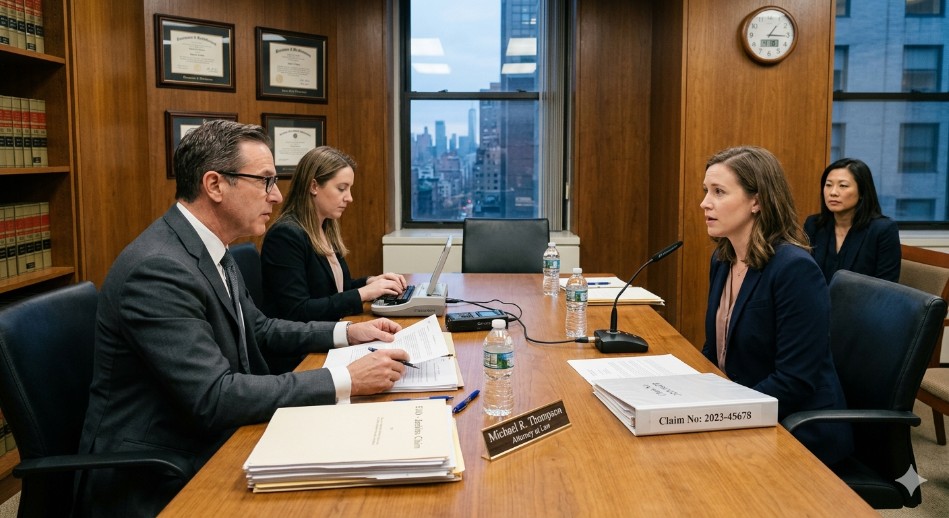
When hiring a lawyer, reframe the initial consultation as a two-way interview. You are not merely petitioning for representation; you are evaluating whether this professional deserves your trust and a percentage of your recovery. The Supreme Court of Ohio recommends approaching this meeting like a job interview, assessing how attentively the candidate listens and whether they explain complex legal concepts in accessible terms.
Your personal injury lawyer becomes your advocate, strategist, and voice in adversarial proceedings. This relationship demands robust communication and mutual trust. You need someone who returns calls within 24 hours, translates dense legal jargon into plain English, and involves you in settlement decisions. Remember, you are entrusting this individual with your family’s financial security. Apply the same rigor you would use when hiring a CEO for your company—because that is precisely the magnitude of this decision.
Understanding Contingency Fees and Cost Structures
Most personal injury attorneys work on a contingency fee basis. Rather than charging hourly rates upfront, they receive a percentage of your final recovery—typically between 25% and 40%, depending on case complexity and whether the matter proceeds to trial. This arrangement aligns your interests with your lawyer’s, as they only get paid when you do.
However, you must distinguish between the attorney’s fee and case expenses or costs. Under ABA Model Rule 1.5, your written fee agreement must clearly separate these amounts. Fees compensate the attorney for legal expertise; costs cover litigation expenses like court filing fees, expert witness retainers, medical record copying, and deposition transcripts.
The sequence of deductions affects your net recovery significantly. Ask explicitly whether costs are subtracted before or after the attorney calculates their percentage. Consider a $100,000 settlement with $10,000 in costs. If the fee is 33% calculated after costs, the attorney receives $29,700, leaving you $60,300. Calculated before costs, the fee becomes $33,000, leaving you $57,000—a difference of $3,300.
Crucially, inquire about your liability for expenses if the case is lost. ABA Model Rule 1.5 requires that contingency agreements state clearly whether you owe costs regardless of outcome. Some agreements hold you responsible for advanced costs even without recovery; others absorb that risk. The State Bar of California emphasizes that these terms must appear in writing, never merely discussed orally.
Case Costs vs. Living Expenses
Attorneys may advance litigation expenses like deposition costs and expert witness fees, which you typically repay from any recovery. However, ABA Model Rule 1.8 generally prohibits lawyers from providing personal financial assistance for your living expenses—rent, groceries, or medical bills unrelated to the case. This distinction protects both parties from conflicts of interest and ensures the attorney remains focused on legal advocacy rather than becoming a de facto creditor.
Reading the Fee Agreement Line-by-Line
Before executing any contract, verify your written fee agreement includes: the precise scope of representation (what the lawyer will and will not do), the exact percentage calculation methodology, whether costs are deducted pre- or post-fee, and your specific liability for expenses if unsuccessful. ABA Model Rule 1.5 also mandates a closing statement at the case’s conclusion showing the outcome and remittance to the client. Never sign a blank agreement or one containing vague “to be determined” provisions.
How to Verify a Personal Injury Attorney’s Credentials
Before entrusting your case to anyone, confirm they are licensed and in good standing. Every state maintains an attorney search database through its state bar. For example, California’s Attorney Search tool provides contact information, active licensure status, and disciplinary history extending back to the attorney’s admission date.
Visit your state’s bar website and search the lawyer’s full name. Look for “active” status and review the disciplinary history carefully. Public records will reveal any suspensions, disbarments, or ethical violations. The State Bar Court of California maintains these records publicly, allowing you to verify credentials instantly without charge.
Additionally, consider using certified lawyer referral services. These programs, monitored by state bars, require participating attorneys to carry malpractice insurance and meet minimum experience requirements. Certification matters because it implies quality standards and initial vetting that unregulated online directories lack. The American Bar Association notes that certified services help consumers find qualified representation while ensuring basic competency checks have been performed. This step proves especially crucial when searching for the best personal injury lawyer near me, as online reviews can be fabricated but state bar records cannot.
Experience and Case Results: Critical Questions to Ask
When evaluating potential counsel, investigate their specific experience with cases analogous to yours. General practice experience differs substantially from specialized personal injury expertise. Ask directly: “How many cases similar to mine have you handled in the past three years?” and “What were the specific outcomes?”
Distinguish carefully between verdicts and settlements. An attorney who settles every case might avoid the courtroom, potentially weakening your negotiating position against insurance companies. Conversely, demonstrated trial experience signals to adjusters that you will not accept inadequate offers. Ask about their success rate at trial versus settlement to gauge their litigation comfort level.
Firms like Rice & Kendig demonstrate the value of extensive experience, having recovered over $150 million for clients across various personal injury matters including motor vehicle accidents, wrongful death claims, and premises liability cases. Their track record illustrates how seasoned representation can maximize recovery while navigating complex liability disputes.
ABA Model Rule 1.4 requires lawyers to explain matters sufficiently to allow you to make informed decisions. This ethical obligation means you have every right to request concrete examples of past results. If an attorney cannot provide specific outcomes or speaks only in vague generalities, consider that a significant warning sign. Ask about current case volume too—managing hundreds of files simultaneously might mean you receive less individual attention than your serious injuries warrant.
Case Management and Day-to-Day Handling
You might meet with a named partner during your consultation, but who actually prepares your file? Ask specifically: “Who will work on my case day-to-day?” Will associates, paralegals, or contract attorneys perform the bulk of the work? Delegation is standard practice, but you deserve transparency regarding who manages the factual details.
Inquire about staffing ratios and current caseloads. If the firm manages thousands of cases through a settlement mill, your matter might receive cookie-cutter treatment rather than individualized strategy. Ask how the firm handles staff transitions—if your assigned attorney leaves the firm, who assumes responsibility, and will you receive immediate notification?
Under ABA Model Rule 1.4, lawyers must keep clients reasonably informed about the status of their matter. This duty extends to disclosing who is handling your case and any changes in staffing. Asking these questions about team structure is a crucial tip for hiring a personal injury attorney, as it can prevent unpleasant surprises six months into litigation. You want assurance that experienced eyes review your medical records and that someone promptly returns your calls when you have urgent questions about treatment authorization or settlement offers.
Communication, Timeline, and Trial Strategy
Clear communication forms the backbone of the attorney-client relationship. Under ABA Model Rule 1.4, your lawyer must keep you reasonably informed about case developments and promptly comply with reasonable requests for information. During your initial meeting, establish concrete expectations: “How often will you update me, and who is my primary contact?” Will you speak directly with the attorney, or will paralegals screen all communication?
Ask about their methodological approach to handling cases. Do they front-load investigation, hiring private investigators immediately to document accident scenes and preserve physical evidence? How do they handle negotiation—do they automatically file suit if initial offers are inadequate, or do they prolong negotiations indefinitely? Understanding the investigation process helps you know your role in gathering subsequent medical records or witness statements.
Regarding timelines, no ethical lawyer can predict exact dates, but experienced attorneys can provide realistic ranges based on your injury severity, required treatment duration, and insurance company responsiveness. Ask what factors might extend the duration—complex liability disputes, incomplete medical recovery, or crowded court dockets.
Finally, clarify your decision-making authority. You retain ultimate authority over settlement acceptance and whether to proceed to trial. Your attorney should explain strategic options clearly and provide recommendations, but the final choice remains yours. This ethical duty ensures you understand the risks and benefits at each procedural stage, allowing you to give informed consent for key decisions.
Settlement vs. Trial Strategy
Probe whether the attorney prefers quick settlements or vigorous litigation. Ask: “Under what circumstances would you recommend accepting a settlement offer versus proceeding to verdict?” Their answer reveals their risk tolerance and valuation methodology. Lawyers who rarely try cases may undervalue claims to avoid courtroom preparation. Conversely, those prepared for trial often secure higher pre-trial settlements because insurance companies know they cannot be bullied into lowball offers. This strategic posture directly impacts your final recovery amount and the fairness of the resolution.
Your Complete Personal Injury Lawyer Consultation Checklist
Arrive prepared to maximize your consultation value. Bring relevant documents: medical records related to the accident, police reports, insurance correspondence including demand letters, photographs of injuries or property damage, and a written timeline of events. These materials allow the attorney to evaluate liability and damages accurately rather than relying on your memory alone.
Treat the meeting as a structured interview. Assess listening skills—does the lawyer interrupt you mid-sentence, or do they allow you to tell your complete story? Do they explain legal concepts clearly without condescension? The Supreme Court of Ohio suggests evaluating whether they answer questions fully or rush through responses to get you out the door.
For additional guidance, review these Tips for hiring a lawyer, which outline key steps and critical factors to consider when evaluating law firms and their approach to cases.
Use this organized checklist during your consultation:
Credentials & Verification – [ ] Confirm active licensure through state bar attorney search – [ ] Check for disciplinary actions, suspensions, or malpractice claims – [ ] Verify participation in certified lawyer referral services if applicable
Fees & Costs – [ ] Obtain written contingency fee agreement specifying exact percentage – [ ] Clarify whether costs are deducted before or after the fee calculation – [ ] Confirm liability for expenses if case is unsuccessful – [ ] Review closing statement requirements per ABA rules
Experience & Strategy – [ ] Ask about case volume and outcomes in similar matters – [ ] Determine trial experience versus settlement-only practice – [ ] Clarify who handles day-to-day work and current firm caseload size
Communication – [ ] Establish update frequency and primary contact person – [ ] Confirm prompt response protocols for urgent questions – [ ] Verify willingness to explain matters for informed decision-making
Red Flags and Final Vetting Steps Before Signing
Watch for warning signs that signal potential ethical or competency problems. Never trust a lawyer who guarantees specific monetary outcomes—ethical attorneys cannot promise particular settlements or verdicts because litigation involves too many variables. Beware of high-pressure tactics demanding immediate signature; reputable counsel allows you 24 to 48 hours to review the written fee agreement at home. Vague answers about personal injury lawyer fees or evasive responses regarding cost liability should send you searching elsewhere.
Before signing, complete final verification steps. Compare the written agreement against ABA Model Rule 1.5 requirements: Is the scope of representation clearly defined? Does it state the percentage basis and calculation method? Are your responsibilities regarding litigation costs explicit?
Take one last look at the state bar website to confirm the attorney remains in good standing—licensure status can change rapidly. Understand exactly what the agreement covers; some limit representation to settlement negotiations only, excluding trial work unless you execute an additional agreement.
When vetting a personal injury attorney, trust your instincts. If something feels wrong during the consultation—whether it is poor communication, unrealistic promises, or sloppy documentation—continue your search. The right lawyer will welcome your questions, provide clear written terms, and demonstrate respect for your difficult situation. You deserve nothing less when your financial future and physical recovery hang in the balance.
Choosing the right legal representation after an injury requires diligence, but the effort protects your long-term financial security. Remember three key principles: verify credentials through official state bar channels, understand every line of your fee agreement before signing, and prioritize clear communication over flashy advertising. The attorney you select becomes your partner in recovery—choose someone with the experience to maximize your compensation and the integrity to keep you informed throughout the process. Take the checklist provided here, schedule multiple consultations, and hire the lawyer who earns your confidence through transparency, not pressure. Your case deserves careful consideration; give yourself the gift of qualified, ethical representation.