

Social Security Disability Appeals in Dallas: A Complete Guide to the Process
Receiving a denial letter from the Social Security Administration (SSA) can feel devastating—especially when you’re counting on those benefits to cover essential living expenses. If you’re staring at a notice that says your disability claim has been rejected, you’re not alone. The majority of initial Social Security Disability applications are denied, but that decision is rarely the final word. You have the right to challenge the determination through a structured review system that applies equally whether you live in Dallas, Houston, or anywhere else in Texas.
This guide walks you through the entire Social Security Disability Appeals Process from start to finish. You’ll learn exactly how to calculate your deadlines, which forms to file, what happens at each administrative level, and when professional guidance might strengthen your case. By understanding these steps, you can protect your rights and present the strongest possible argument for the benefits you need.
What Is the Social Security Disability Appeals Process?
An appeal, in the context of SSA disability claims, is simply a formal request asking the agency to review a decision you disagree with. When you receive an unfavorable determination on your initial application for Social Security Disability Insurance (SSDI) or Supplemental Security Income (SSI), you aren’t required to accept it. Instead, federal regulations provide a four-level administrative and judicial pathway designed to ensure your claim receives thorough consideration.
Dallas SSD Appeals follow the same federal rules that govern all Texas residents. The Social Security Administration operates as a national program, meaning the procedural requirements in Dallas mirror those in every other state. However, understanding the local practicalities—such as which regional office handles your paperwork—can help you navigate the system more efficiently.
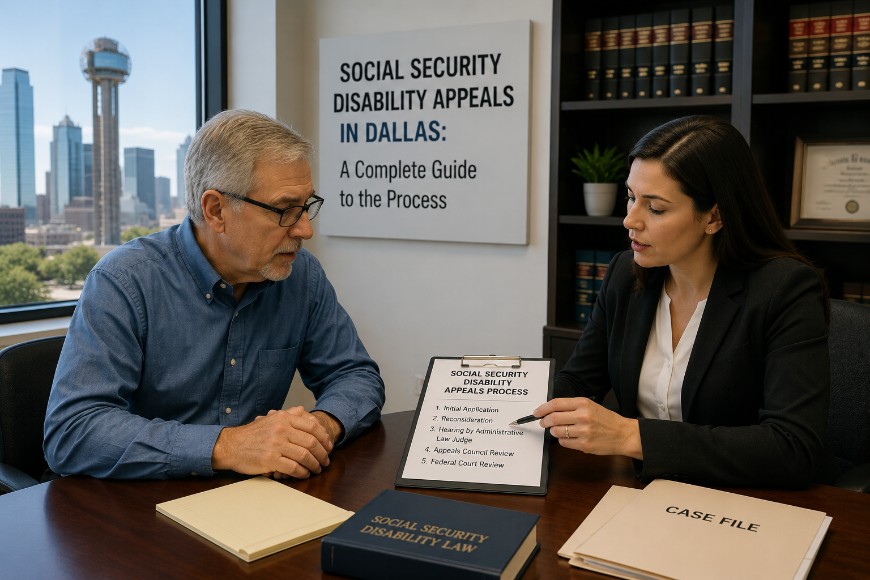
The appeals pathway consists of four distinct stages: Reconsideration, Administrative Law Judge (ALJ) Hearing, Appeals Council Review, and Federal Court action. Each level offers a different type of review, with increasing formality as you progress. You cannot jump ahead; the system generally requires you to exhaust each administrative level before advancing to the next.
The entry point for every appeal is the Request for Reconsideration. This first level asks SSA to conduct a complete review of your claim by someone who was not involved in the original decision. During reconsideration, SSA will examine all the evidence previously submitted, plus any new medical information you provide. This stage is a mandatory step, but it’s important to set realistic expectations. Nationally, the vast majority of reconsiderations are also denied. However, submitting new, compelling medical evidence here is crucial for building a strong record for the next, more promising stage: the hearing with an Administrative Law Judge.
Understanding this structure matters because timing is absolute. The clock starts ticking the moment SSA issues its decision, and missing a deadline can terminate your right to appeal permanently. While the process may seem daunting, breaking it down into discrete steps makes it manageable. The key is acting quickly, staying organized, and knowing exactly what each stage requires.
The Four Levels of Disability Benefits Appeals in Texas
When pursuing a Disability benefits appeal Dallas residents must navigate a sequential system with four distinct levels. You cannot skip stages or choose where to start based on preference. Instead, you must generally exhaust each level before proceeding to the next, creating a ladder of review that ensures thorough consideration of your claim.
Level One: Reconsideration The first step after an initial denial is requesting reconsideration. A different examiner and medical team—completely uninvolved in your original determination—will review your file. They will evaluate the same evidence plus any new medical records you submit. This fresh look often results in approval when the initial reviewer missed critical details.
Level Two: Administrative Law Judge (ALJ) Hearing If reconsideration results in another denial, you may request a hearing before an Administrative Law Judge. This is the only level where you will appear in person (or via video) to answer questions and present testimony. Crucially, the ALJ has no prior involvement in the initial determination or reconsideration decision. The judge functions as an independent fact-finder who will question you under oath, review medical evidence, and hear testimony from vocational experts about your ability to work.
Level Three: Appeals Council Review Should the ALJ deny your claim, the next step is requesting review by SSA’s Appeals Council. This body does not reevaluate the facts of your case in a traditional sense. Instead, it examines whether the ALJ made legal errors, abused discretion, or if there is new evidence that could change the outcome. The Appeals Council may deny your request, issue its own decision, or remand the case back to an ALJ for further proceedings.
Level Four: Federal Court Action The final administrative option involves filing a civil action in U.S. District Court. This step moves your case outside the Social Security Administration entirely and into the federal judicial system. At this level, a federal judge reviews whether SSA followed proper legal procedures in denying your benefits.
Each level requires specific forms and operates under strict deadlines. Understanding this SSDI denial appeal Texas pathway helps you prepare appropriate evidence and expectations for each stage’s unique demands.
How to File Your Request for Reconsideration
Time is your most critical resource when learning How to appeal SSDI denial. You have exactly 60 days from the date you receive your denial notice to submit a Request for Reconsideration. However, SSA applies a “5-day presumption” rule that affects how you calculate this window: the agency presumes you received the notice 5 days after the date printed on the denial letter, unless you can prove otherwise with evidence of late delivery.
You have two primary methods for submitting this request. The fastest and most reliable approach is filing online through SSA’s secure appeals portal, which guides you through the necessary questions and immediately timestamps your submission. Alternatively, you may submit a paper Request for Reconsideration using Form SSA-561, mailing or faxing it to your local Social Security office.
If you choose not to file online, you must submit additional companion forms alongside your Form SSA-561. These include the Disability Report – Appeal (Form SSA-3441-BK), which updates your medical information, and the Authorization to Disclose Information to SSA (Form SSA-827), which allows the agency to gather your recent medical records. You can verify the current required forms list on the SSA-3441 information page.
Calendar awareness prevents costly mistakes. If the 60th day falls on a Saturday, Sunday, or federal holiday, the deadline automatically extends to the next business day. This weekend/holiday extension rule protects claimants from administrative closures that would otherwise bar their appeals.
Life doesn’t always cooperate with bureaucracy. If you miss the 60-day window, you may request a “good cause” extension by submitting a written explanation of why the deadline was missed. Acceptable reasons include serious illness, death of an immediate family member, or destruction of your records by fire or other accidental causes. You must demonstrate that circumstances beyond your control prevented timely filing. According to SSA Publication EN-05-10058, these requests are evaluated case-by-case, so provide specific dates and documentation to support your claim.
Navigating the ALJ Hearing Stage in Dallas
After receiving an unfavorable reconsideration decision, your next opportunity comes through a hearing before an Administrative Law Judge. You must request this hearing within 60 days using Form HA-501, available on the SSA forms website. Federal regulation 20 CFR 404.933 establishes this 60-day requirement, emphasizing that written requests must reach SSA within the statutory window.
Hearings are scheduled through the Office of Hearings Operations, which manages the docket for the Dallas region. While wait times vary depending on caseload, understanding that hearings are conducted by independent judges—not SSA employees who denied your initial claim—can ease anxiety about bias.
The proceedings themselves are less formal than traditional court cases but maintain strict evidentiary standards. You’ll testify under oath about your medical conditions, daily activities, and work limitations. Vocational experts may appear to testify about whether jobs exist in the national economy that you could perform despite your impairments. Working with a Dallas SSDI disability lawyer during this stage can help you prepare for the specific procedures used by the regional hearing office.
What to Expect During Your Hearing
Your hearing typically lasts 30 to 60 minutes and takes place in a conference room rather than a courtroom. The ALJ will ask you to describe your symptoms, medications, and how your condition affects daily tasks like cooking, cleaning, or shopping. Medical experts might testify about whether your records meet specific disability listings, while vocational experts discuss job requirements. Remember: this judge played no role in your previous denials and approaches your case with fresh eyes.
The 5-Business-Day Evidence Deadline
SSA enforces a strict “5-business-day evidence rule” requiring you to submit or identify new evidence no later than 5 business days before your scheduled hearing date. Late submission may result in the ALJ refusing to consider the evidence unless you can show exceptional circumstances prevented earlier filing. This deadline ensures all parties have adequate time to review materials before testimony begins, so mark your calendar carefully when scheduling medical record requests.
Appeals Council Review and Federal Court Options
If the ALJ denies your claim, you may request Appeals Council review using Form HA-520 within 60 days of receiving the hearing decision. This form, updated in October 2023, initiates the third administrative level of review. Unlike previous stages, the Appeals Council does not automatically review every case—you must demonstrate that the ALJ made a legal error or that new evidence exists that could alter the decision.
The Appeals Council possesses three potential responses to your request. First, it may deny your request for review entirely if it finds the ALJ’s decision was supported by substantial evidence and applied correct legal standards. Second, it may issue its own decision reversing the ALJ’s denial and granting your benefits. Third, and most commonly, it may remand your case back to an ALJ with instructions to correct legal errors or evaluate new evidence. These outcomes depend heavily on whether you can prove the ALJ made a significant legal or procedural mistake that affected the hearing’s fairness.
Should the Appeals Council deny review or issue an unfavorable decision, you have one final option: filing a civil action in U.S. District Court. You must file this lawsuit within 60 days of receiving the Appeals Council decision, with the same 5-day presumption applying to receipt dates. Critically, SSA explicitly states it cannot assist you with federal court filings—you must either proceed pro se or hire an attorney familiar with federal civil procedure. This stage involves legal briefs arguing that SSA violated administrative law, rather than introducing new medical evidence, marking a significant shift from the administrative process.
Critical Deadlines and the 5-Day Receipt Presumption
Understanding how to calculate your appeal window prevents technical denials that have nothing to do with your medical condition. The calculation begins with SSA’s “5-day presumption” rule: regardless of when you actually opened the envelope, SSA assumes you received the notice 5 days after the date printed on the decision letter. For example, if your denial is dated January 1st, SSA presumes receipt on January 6th, making your 60-day deadline March 7th.
Here’s a concrete calculation example: If you receive a reconsideration denial dated April 15th, add 5 days for the presumption (April 20th), then count 60 calendar days forward. This places your deadline on June 19th. However, if June 19th falls on a Sunday, the weekend/holiday extension rule pushes your deadline to Monday, June 20th.
The 60-day appeal deadline is absolute, but SSA provides a safety valve for those who miss it through no fault of their own. To establish “good cause” for late filing, you must submit a written statement explaining the circumstances with specific dates and supporting documentation. Valid reasons include hospitalization during the appeal period, severe weather preventing mail delivery, or the death of an immediate family member. Merely forgetting the deadline or misunderstanding the instructions rarely qualifies for relief.
When filing, protect yourself by obtaining proof of submission. If mailing forms, use certified mail with return receipt requested. If filing online, screenshot the confirmation page showing your submission date. These records become crucial if SSA claims it never received your appeal. As detailed in SSA Publication EN-05-10058, keeping copies of everything you submit—along with tracking numbers—provides the evidence needed to prove timely filing if disputes arise.
When to Hire a Social Security Disability Lawyer in Dallas
You have the right to represent yourself through all levels of appeal, but strategic considerations often favor professional assistance. Medical evidence development grows increasingly complex as you progress through the system, requiring detailed records that connect specific symptoms to functional limitations preventing work. At the hearing level, cross-examining vocational experts who testify about available jobs demands knowledge of occupational databases and SSA’s regulatory framework—skills most claimants lack.
Local Dallas attorneys familiar with the regional SSA office and hearing office practices can provide specific procedural advantages. They understand which vocational experts frequently testify in Dallas hearings and how particular ALJs prefer evidence organized. They also ensure deadlines are met, preventing technical dismissals that end viable claims.
Consider contacting counsel immediately upon receiving a reconsideration denial. While you can certainly attempt reconsideration without representation, the hearing stage involves legal complexities that significantly impact outcomes. The Law Office of Burke Barclay specializes in Social Security Disability claims and appeals, offering free consultations and operating on a contingency basis where fees are only collected if you win your case.
When evaluating representation, look for attorneys who focus specifically on disability law rather than general practice. Ask about their experience with your specific medical condition and their familiarity with the Dallas hearing office. The right representative should explain the 5-business-day evidence rule clearly, discuss how they will develop your medical record, and outline realistic expectations for your case timeline without making guarantees about specific outcomes.
Conclusion
Navigating the Social Security disability system requires precision, patience, and persistence. Remember these three essentials: First, you have 60 days from the date on your denial letter (plus the 5-day presumption) to file each appeal, with the clock starting at every level. Second, you must exhaust each administrative stage—reconsideration, ALJ hearing, and Appeals Council—before reaching federal court. Third, strict evidence deadlines, particularly the 5-business-day rule for hearings, can make or break your case regardless of your medical condition.
While the process feels overwhelming, thousands of Texans successfully secure benefits through this system every year. By acting quickly to preserve your appeal rights and considering professional guidance for complex stages, you maximize your chances of obtaining the financial support you need. Don’t let a initial denial discourage you—your next step could be the one that changes everything. Start by marking your calendar, gathering your medical records, and filing that first appeal before time runs out.