

Motorcycle Gear & Liability: How Protective Wear Affects Your Claim
You didn’t see the sedan run the red light. One moment you were riding through the intersection on a green, the next you were sliding across asphalt. The other driver received the citation. Fault seems clear. Yet weeks later, the insurance adjuster asks why you weren’t wearing your jacket or gloves. This disconnect frustrates injured riders, but it reflects a critical legal distinction that governs every motorcycle accident claim in the USA. Understanding motorcycle gear liability requires separating who caused the crash from how severely you were hurt—and knowing exactly how state laws and federal standards interact to shape your compensation.
Crash Liability vs. Injury Damages: Understanding the Distinction
According to the National Highway Traffic Safety Administration (NHTSA), motorcycle deaths were 5,932 in 2022, representing 15% of all traffic fatalities despite motorcycles accounting for only a fraction of total vehicle miles traveled. The Centers for Disease Control and Prevention (CDC) reports that in 2020, an estimated 186,013 motorcyclists were treated in emergency departments for crash injuries. These staggering numbers explain why courts and insurers scrutinize every factor influencing injury severity, even when another party clearly caused the collision.
Crash liability and injury damages operate on separate tracks. Liability addresses who caused the collision. If a driver runs a stop sign, tailgates, or drifts into your lane, that driver bears 100% fault for causing the crash. Damages, however, measure the harm you suffered and whether you could have reasonably reduced that harm. This distinction creates the shared fault argument and the mitigation of damages defense.
You can hold another driver fully responsible for causing the collision while simultaneously facing questions about whether proper gear might have reduced your specific injuries. For example, a broken leg caused by the impact is different from facial injuries potentially preventable by a visor. Your decision to skip a DOT-compliant helmet or ride without gloves doesn’t make you responsible for the crash, but it may influence how an insurer values your road rash or head trauma. Courts examine motorcycle accident liability for the impact separately from whether your choices amplified the resulting biker injury damages. Understanding this separation helps you anticipate insurance tactics and prepare your documentation accordingly. When navigating these complexities, consider seeking legal guidance from an experienced motorcycle accident attorney.
DOT-Compliant Helmets vs. Novelty Gear: Legal Standards That Matter
Not all helmets are created equal under the law. When you file a motorcycle protective gear claim, the specific helmet you wore becomes central to the discussion. Federal Motor Vehicle Safety Standard No. 218 (FMVSS 218) establishes minimum performance requirements for motorcycle helmets sold in the United States. This regulation covers impact attenuation, penetration resistance, and retention system effectiveness. Understanding this standard helps you grasp the motorcycle gear legal implications of your equipment choices and why proper certification matters for your case.
A true DOT-compliant motorcycle helmet must bear a specific certification label on its outer surface. According to 49 CFR § 571.218, this label must read “DOT,” “FMVSS No. 218,” and “CERTIFIED.” This labeling requirement separates compliant safety equipment from decorative headgear. NHTSA operates a self-certification system. Manufacturers test their own helmets and certify compliance, but the agency clarifies that it does not pre-approve helmets. Instead, the agency conducts random testing after helmets reach the market and can issue recalls if products fail to meet standards.
Novelty helmets present serious legal vulnerabilities. These items mimic the appearance of protective gear but lack structural integrity and certification. They often carry fake DOT stickers or misleading claims. When you suffer head injuries while wearing a novelty helmet, you lose the ability to demonstrate that you took reasonable steps to mitigate harm. Insurance companies exploit this gap to argue that your damages were avoidable or exaggerated. In contrast, a properly certified DOT-compliant motorcycle helmet provides tangible evidence that you exercised reasonable care. This distinction directly affects your motorcycle accident liability arguments and settlement negotiations, particularly when insurers attempt to minimize head trauma compensation.
FMVSS 218 Labeling and Self-Certification Requirements
The specific text requirements found in 49 CFR § 571.218 S5.6.2 mandate that the certification label appear on the outer surface of the helmet. The label must include the manufacturer or brand name, the model designation, and the specific phrase “FMVSS No. 218.” This ensures immediate visual verification of compliance. Because manufacturers self-certify rather than receiving NHTSA pre-approval, you must verify these markings yourself. Purchasing from reputable dealers and checking for the specific wording—not just a “DOT” sticker—protects both your safety and your legal position.
How Novelty Helmets Undermine Injury Claims
Helmets marketed for “novelty” use bypass rigorous FMVSS 218 testing entirely. These products fail to provide legally defensible evidence that you attempted to mitigate head injuries. Insurers use non-compliance to challenge head-injury damages aggressively. When adjusters discover you wore a novelty helmet, they argue that your injuries resulted from inadequate protection rather than crash forces. This shifts focus from the other driver’s fault to your equipment choices. Without certification proof, you cannot counter the inference that your injuries were preventable with proper gear, significantly weakening your motorcycle injury settlement position.
State-by-State Helmet Laws and Insurance Exceptions
Helmet regulations vary dramatically across the USA, creating complex landscapes for riders pursuing compensation. According to the Insurance Institute for Highway Safety (IIHS), as of late 2023, 18 states and the District of Columbia maintain universal helmet laws, 29 states have partial laws, and 3 states have no motorcycle helmet law whatsoever. These categories determine not only your legal compliance but also how insurers evaluate the helmet law impact on settlement negotiations in your jurisdiction.
The CDC defines universal motorcycle helmet laws as requiring all motorcyclists to wear helmets, regardless of age or experience level. Partial laws typically restrict requirements to specific age groups, often riders under 18 or 21, though some states layer additional conditions. Understanding which category applies to your state helps predict how vigorously insurers will contest injury damages based on gear nonuse. The distinction matters because riding legally without a helmet in a partial-law state differs significantly from violating a universal statute, affecting both liability arguments and damage calculations.
Partial law states present unique challenges because the age thresholds vary—some set limits at 18, others at 21, and some include provisional licensing periods. This patchwork means riders crossing state borders may suddenly lose legal protections they enjoyed at home. Insurers exploit these transitions, arguing that riders should have known and complied with stricter standards even when their home state permits helmet-free riding for adults.
California represents the universal law model under California Vehicle Code § 27803. This statute requires both drivers and passengers to wear safety helmets meeting FMVSS 218 standards. The law specifically defines “wearing” as requiring the helmet straps to be securely fastened and the helmet to fit snugly without excessive movement. This means an unfastened or improperly fitted helmet violates the statute even if present on your head during the crash. Such technical violations can complicate your claim despite the other driver’s fault.
Florida takes a different approach under Florida Statutes § 316.211. Riders over 21 may legally forgo helmets, but only if they carry insurance providing at least $10,000 in medical benefits specifically for motorcycle crash injuries. This creates an insurance-linked exception rather than a simple age exemption. The statute also requires all operators to wear proper eye protection, making Florida a hybrid state regarding gear requirements. Insurers often scrutinize whether riders actually maintained the required coverage when claiming exemptions.
Michigan adds another layer of complexity through MCL 257.658. Riders 21 and older may ride without helmets if they hold a proper motorcycle endorsement or have passed a safety course, and if they maintain first-party medical benefits. These layered statutory conditions show how helmet law exceptions often tie to insurance coverage and training rather than age alone. When you ride across state lines, these varying standards affect your compliance status and potential defenses available to insurers. Navigating these distinctions requires careful attention to the specific statutory language governing your crash location.
Universal vs. Partial Law Coverage by the Numbers
The numerical differences between law types are stark. In universal law states, NHTSA reports that 82.7% of riders wear DOT-compliant helmets, compared to just 65.9% in other states. Additionally, 51% of motorcyclists killed in states without universal helmet laws were not wearing helmets, versus only 10% in universal-law states. These statistics demonstrate that universal motorcycle helmet laws significantly influence rider behavior. When presenting your motorcycle protective gear claim, these usage rates help contextualize whether your gear choices aligned with or deviated from typical practices in your state.
Insurance-Linked Exceptions in Florida and Michigan
Florida and Michigan illustrate how helmet exemptions connect to financial responsibility rather than personal choice. Florida permits riders over 21 to skip helmets only when covered by insurance providing at least $10,000 in medical benefits for motorcycle injuries. Michigan similarly requires riders 21 and older to carry first-party medical benefits and possess proper endorsements or safety training to qualify for helmet exemptions. These statutory frameworks create insurance-linked exceptions that complicate settlement discussions. Insurers may argue that riders lacked required coverage, voiding the exemption and establishing negligence per se. Understanding these connections helps you anticipate challenges to your motorcycle injury settlement.
How Comparative Negligence Rules Affect Bikers Without Protective Gear
When you file a claim without protective gear, insurers invoke two legal concepts: comparative negligence for bikers and mitigation of damages. Comparative negligence reduces your compensation based on your percentage of fault for the injuries themselves. Mitigation of damages argues that you should not receive compensation for harm you could have reasonably avoided by taking standard precautions. These doctrines create powerful defenses when you skip helmets, gloves, or jackets, even when another driver clearly caused the collision.
Research from The Community Guide demonstrates the protective value of helmets through systematic reviews of multiple states. States repealing universal helmet laws saw a median 41-point drop in helmet use and a median 42% increase in motorcycle deaths. Conversely, states implementing universal laws saw a median 54-point increase in helmet use and a 31% decrease in deaths. These figures provide objective support for the argument that helmet nonuse directly correlates with injury severity, giving insurers statistical ammunition to reduce biker injury damages.
You can absolutely still file a motorcycle accident claim if you were not wearing protective gear. The other driver remains fully liable for causing the crash itself. However, can the insurance company blame me for worse injuries if I skipped a helmet? Yes, they can argue that a specific portion of your damages resulted from the lack of mitigation rather than the crash forces. For example, if you suffered traumatic brain injury without a helmet, they may accept liability for broken bones caused by the vehicle impact but contest the head injury damages based on failure to mitigate.
NHTSA data complicates these discussions further. According to 2021 NHTSA data, 42% of motorcycle riders who died in single-vehicle crashes at night were alcohol-impaired. Insurers often blend this type of data with gear nonuse to construct broad “reckless rider” narratives. They suggest that missing helmets, combined with allegations of speed, alcohol references, or lack of training, demonstrate generalized negligence rather than specific mitigation failures. This tactic attempts to expand your fault share beyond injury severity into crash causation itself, potentially reducing your total recovery significantly. Some jurisdictions apply pure comparative negligence, allowing recovery even if you are 99% at fault, while others bar recovery if you exceed 50% or 51% fault. A few states still use contributory negligence, potentially barring any recovery if your gear choice contributed to damages. Knowing which standard applies determines whether the gear argument becomes a minor reduction or a complete barrier to compensation.
Understanding these distinctions protects your rights as you pursue a motorcycle protective gear claim. You need experienced legal counsel who can separate legitimate questions about damages from overreaching attempts to shift crash liability onto you through conflated arguments.
Combating the “Reckless Rider” Narrative
Insurance adjusters often combine gear nonuse, alleged speed, alcohol references, and training deficits into generalized negligence arguments. They paint a picture of an irresponsible rider to maximize your fault percentage. Countering this requires separating crash causation from injury mitigation. You did not cause the collision by wearing inappropriate gear. You may have influenced injury severity. Keeping these arguments distinct prevents insurers from unfairly penalizing you for the crash itself while allowing legitimate questions about damage reduction to be addressed appropriately.
When Eye Protection, Jackets, and Gloves Become Evidence
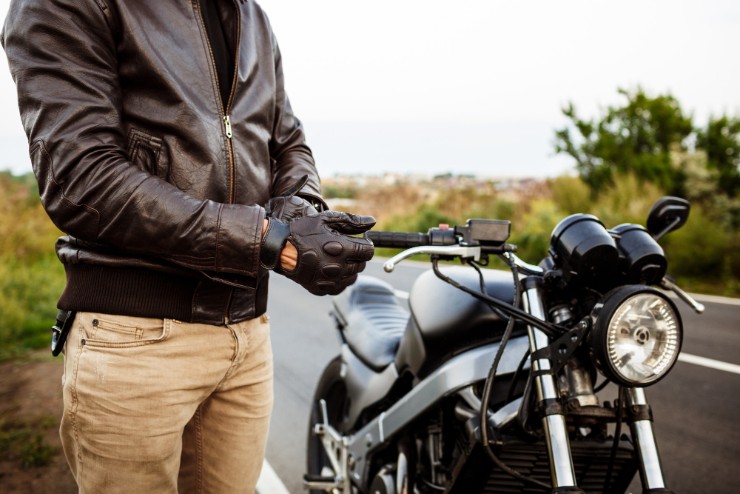
Helmets dominate the discussion, but protective equipment extends to eye protection, jackets, gloves, and boots. These items become critical evidence when you suffer specific injuries like road rash, hand trauma, or facial lacerations. Documentation of proper gear use strengthens your motorcycle protective gear claim against aggressive mitigation arguments from insurers.
New York requires all motorcycle operators to wear approved eye protection regardless of whether the bike has a windshield. The New York DMV Motorcycle Manual specifies that eye protection must meet standards that prevent debris from impairing vision. Florida similarly mandates eye protection for operators under Florida Statutes § 316.211, recognizing that crashes often follow moments after debris or wind impairs a rider’s ability to see hazards. Missing eye protection when you suffer corneal abrasions or facial fractures allows insurers to argue that your injuries resulted from compounded errors rather than crash forces alone.
Missing gloves and jackets directly affect road rash damages claims. When you slide across pavement at speed, leather or armored textile garments absorb friction that would otherwise shred skin down to muscle or bone. Without these barriers, insurers argue that your road rash injuries were avoidable through reasonable care. Cases involving severe hand injuries face similar scrutiny when gloves are absent, as palms instinctively extend to break falls. Adjusters calculate the surface area of abrasions and compare them against what protective clothing would have covered, often reducing offers for skin grafts and debridement procedures.
California’s approach to helmet use under Vehicle Code § 27803 illustrates how improper gear use creates evidentiary gaps. The statute requires secure fastening with straps. An unstrapped helmet that flies off on impact provides no mitigation evidence, even if it was DOT-compliant. This distinction matters because NHTSA reported that nationwide DOT-compliant helmet use was 64.9% in 2022. When your documentation shows you belonged to this majority, you counter implicit accusations that you disregarded standard safety practices. Preserving damaged jackets and gloves similarly proves you wore protective equipment that may have reduced injury severity.
Calculating Damages: Medical Costs, Pain, and Suffering
Understanding how gear nonuse affects specific damage categories helps you evaluate settlement offers and anticipate insurance strategies. The CDC reports that fatal and non-fatal motorcycle crash injuries resulted in an estimated $89 billion in lifetime medical, work, and quality-of-life costs in 2019. Additionally, motorcyclist fatality rates per mile were nearly 22 times passenger car rates. These staggering figures underscore why insurers aggressively contest biker injury damages using protective equipment arguments, seeking to minimize payouts across all categories of loss.
Motorcycle accident compensation breaks down into economic and non-economic categories. Economic damages include concrete financial losses: medical bills, surgical costs, rehabilitation expenses, and lost wages. Non-economic damages cover pain and suffering, emotional distress, and loss of enjoyment of life. Gear nonuse affects these categories differently depending on your specific injuries and state law, creating complex valuation scenarios that require careful analysis.
If you suffered head trauma without a helmet, insurers may challenge both economic and non-economic damages. They argue that hospitalization costs, neurological rehabilitation, and ongoing care resulted from the lack of protection rather than crash forces alone. For road rash without a jacket or gloves, challenges typically focus on the medical bills for skin grafts, infection treatment, and dressing changes. Facial injuries from missing eye protection or visors may trigger disputes over plastic surgery costs and pain and suffering associated with permanent disfigurement.
When you ask, “If the driver caused the crash, why does my gear matter at all?” remember that liability and damages operate separately under tort law. The driver pays for causing the collision. However, you may receive reduced compensation for injuries deemed preventable through reasonable gear use. Will helmet nonuse affect medical bills, pain and suffering, or both? Typically both categories face reduction, though the percentage varies by jurisdiction and injury type. Some states apply comparative negligence percentages across all damages, while others limit the reduction logic to specific injury types where causation is clear. Your attorney must analyze whether your head injury would have occurred even with a helmet, using biomechanical evidence to separate unavoidable trauma from mitigable harm.
Securing fair motorcycle injury settlement amounts requires documenting exactly which injuries your gear prevented versus which it could not have prevented. For example, a DOT-compliant helmet prevents direct skull fractures but may not prevent concussions or neck injuries. This nuance matters when insurers attempt blanket reductions to your total damages claim. Working with a skilled motorcycle accident lawyer can help ensure that legitimate liability for the crash is not unfairly diminished by disputes over damage mitigation.
Protecting Your Rights After a Crash: Evidence and Legal Guidance
Your actions immediately after a crash significantly impact motorcycle accident claims involving gear disputes. Preserve every piece of equipment exactly as it existed during the collision, as these items become forensic evidence supporting your position.
Retain the damaged helmet with straps intact. Do not clean it, repair it, or throw it away. The fracture patterns, strap positions, and impact marks provide forensic evidence of both crash forces and proper use. Photograph jacket and glove damage showing abrasion patterns that prove you wore them during the incident. Save purchase receipts proving DOT compliance for the helmet and armor ratings for other gear. Document proper fit through photos showing how the helmet sat on your head and how straps fastened, addressing potential claims that you wore the equipment improperly.
Passengers face different statutory treatment than operators under state helmet laws. In California, passengers must wear helmets just like drivers. In Florida, the insurance-linked exception applies equally to passengers over 21 with proper coverage. Can a passenger’s lack of helmet use affect a claim? Yes, particularly if the passenger controlled their own gear choice rather than relying on the operator’s supply. Passengers injured while riding with exempted operators may also face questions about whether they independently verified insurance coverage or simply assumed the ride was legal.
Consulting experienced legal counsel helps you navigate these motorcycle gear legal implications. Should I keep my damaged helmet and riding gear after the crash? Absolutely. Your attorney can use this physical evidence to counter mitigation arguments and demonstrate reasonable care under the circumstances. They understand state-specific exceptions like Florida and Michigan insurance requirements, helping you avoid statutory pitfalls that insurers exploit to deny coverage. They also combat exaggerated comparative negligence arguments by isolating true crash causation from damage mitigation, ensuring you receive fair compensation for injuries caused by another’s negligence.
Protecting your rights means acting quickly to preserve evidence, document your gear compliance, and secure representation that understands the intersection of federal safety standards and state-specific helmet laws. The right preparation transforms your equipment choices from liability questions into evidence of responsible riding.